
12
September
Riyadh's 30% EV Target by 2030: What It Means for Corporate Fleet Leasing Decisions Today
The way businesses think about transportation is changing. Electric vehicles are moving from a niche option to an increasingly important part of fleet planning, and businesses in Saudi Arabia are starting to consider what electrification could mean for their commercial operations.
Riyadh is an important part of that transition. The Royal Commission for Riyadh City has set a target for electric vehicles to represent 30% of vehicles in the city by 2030. The target forms part of broader sustainability and mobility initiatives for the capital.
For companies operating delivery vans, commercial vehicles, and trucks in Riyadh, this does not necessarily mean replacing an entire fleet with electric vehicles immediately. Instead, it gives businesses a reason to start thinking about their next fleet cycle today.
One option worth considering is corporate leasing.
What Does Riyadh's 30% EV Target Mean for Businesses?
The 30% target is a city-level objective, rather than a requirement that every business must convert 30% of its fleet to electric vehicles.
However, it signals the direction in which urban transportation is developing.
Saudi Arabia is also investing in the wider electric vehicle ecosystem. The Electric Vehicle Infrastructure Company (EVIQ), established by the Public Investment Fund and Saudi Electricity Company, plans to deploy more than 5,000 fast chargers across over 1,000 locations in the Kingdom by 2030.
For businesses, this growing ecosystem could gradually make electric fleet adoption more practical.
The important question is not simply, "Should we buy an electric vehicle?"
It is:
"How can we introduce electric vehicles into our fleet without disrupting our business?"
Why Corporate Leasing Could Help With Fleet Electrification
Purchasing an electric fleet outright requires significant planning and capital.
Businesses need to consider vehicle costs, charging infrastructure, maintenance, battery technology, operating patterns, and the useful life of the vehicles.
Corporate leasing offers another way to approach the transition.
Instead of purchasing every vehicle, a business can lease vehicles for an agreed period and structure its fleet around changing operational requirements.
This can be particularly useful for companies that are still evaluating electric vehicle performance in their specific delivery routes.
A phased approach can allow businesses to introduce a smaller number of electric vehicles, monitor their performance, and make future fleet decisions based on actual operating experience.
Start With Your Daily Routes
Before choosing an electric vehicle, businesses should look closely at how their existing fleet operates.
Not every route is equally suitable for electrification.
For example, vehicles used for predictable urban deliveries may have different requirements from trucks travelling long distances between cities.
Review:
- Average daily kilometres
- Typical payload
- Number of daily trips
- Driver schedules
- Vehicle downtime
- Parking locations
- Overnight parking arrangements
- Charging opportunities
- Traffic and route conditions
This information can help businesses identify which vehicles could potentially transition to electric operation first.
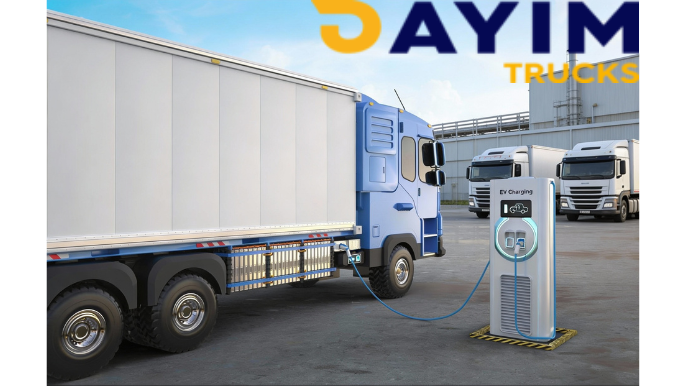
Electric Trucks on Lease: What Should Businesses Consider?
For companies interested in electric trucks on lease, the decision should involve more than the monthly lease payment.
Electric commercial vehicles have different operating requirements from conventional vehicles. Charging time, driving range, payload, charging location, and electricity costs all need to be considered.
Before signing a lease, businesses should ask:
What is the practical driving range?
The advertised range may not always represent the range achieved under a particular commercial workload. Payload, traffic, weather, driving behaviour, and route conditions can affect energy consumption.
How long does charging take?
Charging time needs to fit the company's operating schedule. A vehicle that can charge overnight may work differently from one that needs to operate continuously across multiple shifts.
Where will the vehicle charge?
Businesses should identify whether charging will take place at a warehouse, depot, distribution centre, or another suitable location.
What happens if charging infrastructure is unavailable?
A contingency plan can be important, particularly for delivery businesses where vehicle downtime can affect customer commitments.
Charging Infrastructure Is Part of the Fleet Decision
One of the biggest mistakes businesses can make is treating the vehicle and charging infrastructure as two completely separate decisions.
They are connected.
If a company leases ten electric vehicles but has charging capacity for only three at a time, fleet operations could quickly become complicated.
Businesses should therefore assess their electrical infrastructure before expanding their electric fleet.
The good news is that Saudi Arabia's charging ecosystem is developing. EVIQ launched its first fast-charging station in Riyadh in January 2024, with chargers capable of more than 100 kW. The company has stated its intention to expand its network significantly by 2030.
For corporate fleet operators, the expansion of charging infrastructure is an important development to monitor.
Corporate Leasing Vehicle in Saudi Arabia: Think Beyond the Monthly Payment
Companies searching for a corporate leasing vehicle in Saudi Arabia should compare the complete cost of operating the vehicle rather than focusing only on the monthly lease price.
Consider:
- Lease duration
- Initial payment requirements
- Monthly lease cost
- Maintenance
- Insurance
- Charging equipment
- Electricity costs
- Vehicle downtime
- Replacement vehicle arrangements
- Mileage limits
- End-of-lease conditions
The right agreement will depend on the company's fleet requirements.
For a business with predictable urban routes, an electric vehicle may fit naturally into part of the fleet. For another company with long-distance routes and limited charging opportunities, conventional commercial vehicles may continue to play an important role.
Why a Phased Fleet Strategy Makes Sense
Businesses do not necessarily have to choose between a fully electric fleet and a fully conventional fleet.
A mixed fleet can provide a practical transition path.
For example, a company could introduce electric vehicles for shorter urban routes while continuing to use conventional trucks for longer or more demanding routes.
Over time, the business can collect real-world data on:
- Energy consumption
- Charging time
- Maintenance
- Driver experience
- Route suitability
- Vehicle availability
- Operating costs
That information can then guide future fleet decisions.
This approach can be particularly useful for businesses that are unsure how electric commercial vehicles will perform under Saudi operating conditions.
Which Industries Could Benefit From Early EV Fleet Planning?
Several industries operating in Riyadh rely heavily on commercial transportation.
E-commerce companies may find urban delivery routes suitable for smaller electric commercial vehicles.
Food and beverage businesses can evaluate electric vehicles for predictable distribution routes.
Logistics companies can identify specific delivery lanes where charging requirements are manageable.
Pharmaceutical distributors can examine electric vehicles alongside their temperature-controlled and specialised transportation requirements.
QSR businesses may also explore electric vehicles for regular store-supply routes.
The key is to match the vehicle to the route rather than adopting technology simply because it is new.
Why Leasing Can Be Useful During a Changing EV Market
Electric vehicle technology continues to develop, while charging infrastructure is also expanding.
For businesses, this creates a natural question: what happens if today's technology looks different a few years from now?
Long-term corporate leasing can provide a structured way to manage fleet replacement cycles, depending on the contract.
Rather than committing substantial capital to vehicle ownership, businesses can potentially align vehicle replacement with their wider fleet strategy.
However, companies should carefully review lease terms covering battery performance, maintenance, charging equipment, mileage, early termination, and end-of-contract responsibilities.
Why Choose Dayim Trucks?
Dayim Trucks has more than a decade of experience in the transportation industry and is the only specialist truck rental and leasing company in Saudi Arabia.
Dayim Trucks has grown into one of the respected truck rental companies in Saudi Arabia.
Its rental and leasing solutions support businesses across major sectors, including Food & Beverage, Logistics, E-commerce, QSR, and Pharmaceutical.
For businesses considering a gradual move toward electric commercial vehicles, working with an experienced fleet partner can help bring vehicle requirements, leasing needs, and operational planning together.
The Time to Start Planning Is Now
Riyadh's 2030 electric vehicle target does not mean every company needs to replace its entire fleet today. Instead, it highlights a broader change in the city's transportation landscape.
With Saudi Arabia also developing its EV manufacturing and charging ecosystem, businesses have an opportunity to start evaluating where electric vehicles could fit into their future fleet strategy.
For companies, the smartest starting point is practical: analyse routes, understand vehicle requirements, evaluate charging options, calculate operating costs, and consider whether corporate leasing can provide the flexibility needed during the transition.
Whether your business is exploring electric trucks on lease, a corporate leasing vehicle in Saudi Arabia, or a broader commercial fleet strategy, early planning can make the eventual transition easier to manage.

تعليقات